My actual voice — fillers, pauses, Malayalam-shaped grammar and all. Press play and read along. This is where every page on this site begins.
I want to be honest about what I actually do with a thought — every micro-edit between my head and the page. So this isn't a finished essay pretending the mess never happened. It's the mess, on purpose.
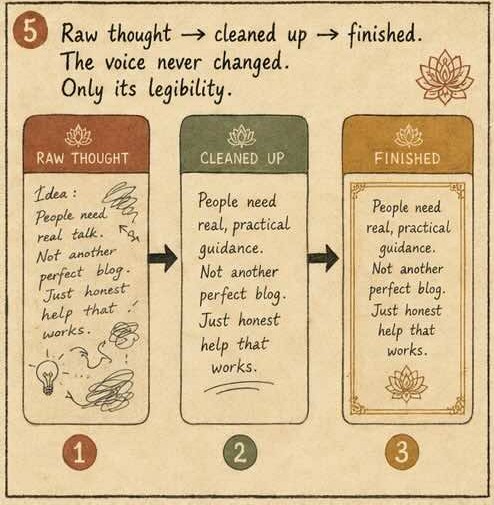
The same thought sits below in three stages. First the raw transcript — exactly what I said. Then the AI-edited version — same thoughts, same order, with the repetition and grammar I struggle with cleaned up. Then the final outcome — shaped into something the world can read. My voice never changes. Only its legibility does.
It's an honest submission of why am I excited about AI, right? So if you think about someone like me, I was not born in an AI native state, right? I was born in south of India, very small. Very small state, and my mother tongue was mostly Malayalam, right? And I'm also recognizing that… I had learning difficulties, right?
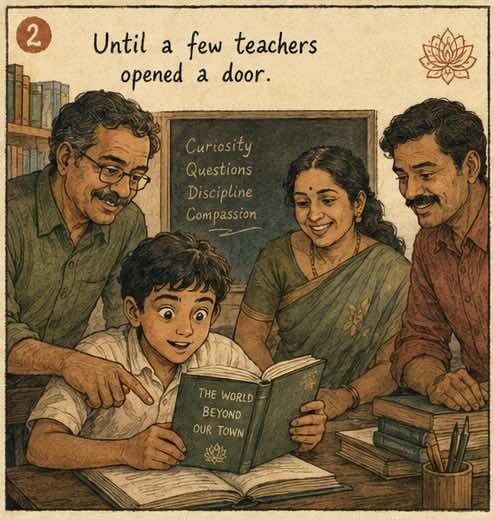
So, as a student, I was pretty average, until I realized I have an interest for few subjects and topic, thanks to some special teachers, kind of made me open up to that possibility. But I don't like tag myself, so I've not done a official study of what is my exact learning difficulty, but as I mature in age, I'm able to understand my ability to listen is less. My bias for action is way too high, and I want to get things done much faster. And I have this need for it to look internationally accepted, right? There is this quality bias that has kicked in, right?
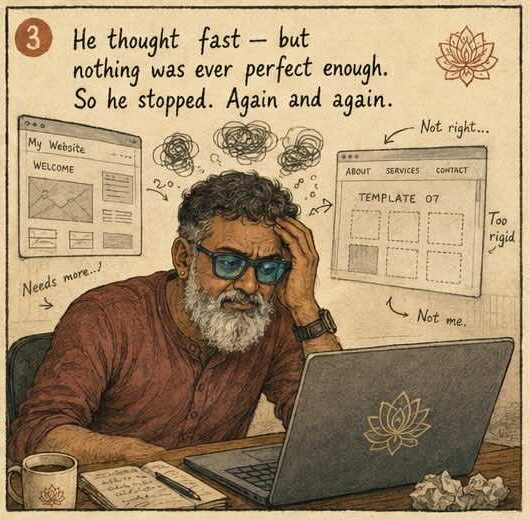
But what is always challenging for me was the speed at which I think, and when I execute, I don't get the perfection that I wanted. Then I stopped the project because I'm not getting the perfection that I wanted, right? And if I have to do any personal project, uh, it's always challenging, right? Because I would go to a wix or a square space or an existing website platform, which gives redefined templates, and predefined templates, never was able to accommodate my thoughts. So I'll always start setting up a website. Then I realize, oh, it's that container that they are providing, is not able to hold my thoughts. Then I'll stop and start doing something else. Right? And then, whenever that project comes alive. This has happened multiple times. Right?
And in the last couple, quarters, couple months, as my proficiency, with AI increased, I started realizing, I think I'm feeling a lot more liberated, right? I'm able to deliver what I wanted without asking around for too many people's time. I can define the guardrails and the quality outcomes based on, based on what I know. And I'm able to have an honest chat to understand what can I improve? And in the past, if I build something, I'd be very anxious to receive a feedback. Right? And if I look today, my attitude has completely changed. So whatever I release, first of all, it has a good baseline. Number two, I'm able to tell the others, bring on your feedback. Let me see, right? And till date, I haven't received anything that I am unable to achieve.
In the past, my natural tendency was, okay, let me prioritize, I will use a rice framework, thanks to intercom, or some prioritization framework to say, should I, should I even attend to this thought? Right, or a product feature request. My backlog has been so full. Why should I add more, unless I remove something, let's not add more. Right? While I'm not refusing the need for prioritization, the need for good product construct. It fundamentally is forcing me to think the project very differently, right?
I remember sitting with a business leader. But we said, Oh, we have 500 new feature requests, what should we do with it? And today, I was sitting with another business leader, and they said, Hey, tell me how do you prioritize, what's the metrics that you used to decide the priority? I want to run the final backlog items through that prioritization framework. and then get 100 of them implemented, if possible, and then start collecting feedback from users, right? So, from the boldness of my thought to execution has completely changed. Right.
Of course, all this started making sense when Matt Schumer's article. That's when it all started making sense to the business leader. And from then, that is February of 2026. I've been trying, I've been on a mission to figure out what's changed, what is fundamentally changing. So, of course, I'm writing all this when I'm on a… on an AI high. It's definitely using a lot of tokens to get to what I'm doing. conscious of that. But I'm so intrigued by the amount of change. that has just happened in the world of AI, right? It's just crazy, insane, insanely different, right?
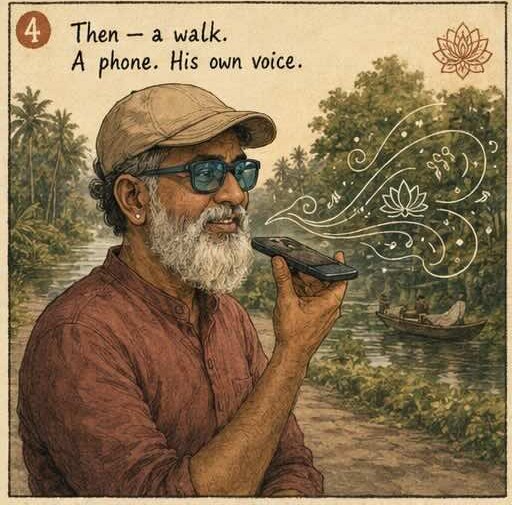
So, just the fact that I'm able to talk about these thoughts, and being able to come out with an article, for someone like me, who is very fast with the thinking or thoughts, but always have to slow down or pause, and reflect, um, is it even worth going behind the thought to today? I have my cloud in my phone, I'm literally recording this while I'm walking, I have a design template that understands me personally. I have a get repository where my clot code is connected, and by the time I finish my walk, my thought has been well organized into structure. So my voice is authentic, right? These are my thoughts. Nothing is changing, but I have a prompt that cleans up reputation, grammar, which I often struggle with, by the way. In the past, I needed a grammar league to clean my… clean my thoughts.
So, here is an exploration of what I recorded. So I wanted a section in the page, which will exactly show what was the raw thought that I gave, and then the polished the AI converted into, and the final output, right? So I wanted to see what happens from the time I gave the prompt. What AI does with the prompt. What does it do based on my prompt that I gave and the final output, right? And I would like to visualize all the three in a visualizable format, to explain to others. What do I do? And why this is game changing for? Right?
And I have no shame in accepting that my mother tongue is Malayalam, my native language is not English. And even today, I make grammatical mistakes, which is something I wish I had fixed when I was a kid, but I think after an age, you stop learning. I'm still open. to finding a way to fix it. But this is the hard reality of my life. And without AI, I would not have bought this thought. out. Right? It would have lived inside me. and died along with me, right?
So, to me, AI is giving life to people like me who probably thought their career is over midlife, right? Do also remember, I think, what the world technologist is not just your raw thoughts, right? The world acknowledges something that is written, something that is visual. So translating your thoughts into a document, into a visual, which others can understand, is super important, right? And to me, that's exactly the power of AI for an individual, right?
Of course, in my other blogs and articles, I'm talking about how it's impacting my team, which is specifically the software development, changes, and I'm trying to bring that story out alive through AILA.fund. I'm also looking at how it is changing the enterprise. through my Chris and Shream Blog, right? So various forums to bring my complex thoughts and emotions that I experience through multiple channels. Yeah, let me pause here.
This is an honest submission of why I'm excited about AI.
If you think about someone like me — I wasn't born in an AI-native state. I was born in the south of India, in a very small state, and my mother tongue was mostly Malayalam. I also recognise that I had learning difficulties. As a student I was pretty average, until I realised I had an interest in a few subjects and topics — thanks to some special teachers who opened me up to that possibility.
I don't like to tag myself, so I've never done an official study of what my exact learning difficulty is. But as I've matured, I understand that my ability to listen is less, my bias for action is way too high, and I want to get things done much faster. I also have a need for things to look internationally accepted — a quality bias has kicked in.
What was always challenging was the speed at which I think: when I execute, I don't get the perfection I want, so I stop the project. Any personal project was difficult for the same reason. I'd go to a Wix or a Squarespace or some existing website platform, but the predefined templates were never able to accommodate my thoughts. I'd start setting up a website, then realise the container they were providing couldn't hold my thoughts — so I'd stop and start something else. This has happened multiple times.
In the last couple of months, as my proficiency with AI increased, I started to feel a lot more liberated. I'm able to deliver what I wanted without asking for too many people's time. I can define the guardrails and the quality outcomes based on what I know, and I can have an honest chat about what I can improve. In the past, if I built something, I'd be very anxious to receive feedback. Today my attitude has completely changed. Whatever I release has a good baseline, and I'm able to tell others: bring on your feedback, let me see. To date, I haven't received anything I'm unable to achieve.
In the past, my natural tendency was to prioritise — to use a framework like RICE, thanks to Intercom, to decide whether I should even attend to a thought or a product feature request. My backlog was so full: why add more unless I remove something? I'm not refusing the need for prioritisation or for good product construct, but AI is fundamentally forcing me to think about the project very differently.
I remember sitting with a business leader who said, "We have 500 new feature requests — what should we do with them?" And recently I sat with another business leader who said, "Tell me how you prioritise. What metrics do you use to decide the priority? I want to run the final backlog through that framework, get a hundred of them implemented if possible, and start collecting feedback from users." From the boldness of thought to execution, everything has changed.
All of this started to make sense when Matt Schumer's article came out — that's when it clicked for the business leader too. That was February 2026, and since then I've been on a mission to figure out what is fundamentally changing. I'm writing all this on an AI high, and it's using a lot of tokens to get me here — I'm conscious of that. But I'm so intrigued by the amount of change that has just happened in the world of AI. It's insanely different.
Just the fact that I can talk through these thoughts and come out with an article — for someone like me, who is very fast with thoughts but always has to slow down, pause and reflect — is remarkable. I have Claude on my phone. I'm literally recording this while walking. I have a design template that understands me personally, and a git repository where my Claude Code is connected, so by the time I finish my walk my thought has been organised into structure. My voice is authentic — these are my thoughts, nothing is changing — but I have a prompt that cleans up the repetition and grammar I often struggle with. In the past, I needed a grammar tool to clean up my thoughts.
I have no shame in accepting that my mother tongue is Malayalam and my native language is not English. Even today I make grammatical mistakes — something I wish I'd fixed as a kid. I think after a certain age you stop learning, but I'm still open to finding a way to fix it. This is the hard reality of my life. And without AI, I would not have brought this thought out. It would have lived inside me and died along with me.
To me, AI is giving life to people like me, who probably thought their career was over at midlife. And remember: the world doesn't acknowledge just your raw thoughts. The world acknowledges something that is written, something that is visual. Translating your thoughts into a document, into a visual that others can understand, is super important. To me, that's exactly the power of AI for an individual.
In my other blogs and articles I talk about how this is impacting my team — specifically the changes in software development — and I'm bringing that story alive through AILA.fund. I'm also looking at how it's changing the enterprise through my Chris and Sree blog. Various forums to bring out the complex thoughts and emotions I experience.
I wasn't born into this. I was born in a small state in the south of India, and my mother tongue is Malayalam, not English. As a child I had learning difficulties. I've never gone and gotten an official diagnosis — I don't like to tag myself — and for a long time I was an average student. What changed me were a few special teachers who opened up a possibility I hadn't seen: that I could be genuinely, hungrily interested in a handful of subjects. That interest is the thread I've been pulling ever since.
How my mind actually works
As I've matured I've come to understand my own wiring. My ability to listen is lower than I'd like. My bias for action is very high — I want things done, and done fast. And I carry a quality bias: whatever I make has to look internationally accepted. The trouble was always the gap between the speed of the thought and the quality of the execution. I think quickly, but when I executed I never reached the perfection I was after. So I'd stop. Project after project died there — not for lack of ideas, but because the result wasn't good enough for me.
Personal projects were the hardest. I'd go to Wix or Squarespace, and the predefined templates could never hold my thoughts. I'd start setting up a site, realise the container they gave me couldn't carry what was in my head, and stop. Then I'd start something else. This happened more times than I can count.
What changed in the last few months
Something shifted as my proficiency with AI grew. I feel liberated. I can deliver what I wanted without borrowing too much of other people's time. I can set the guardrails and define the quality outcomes myself, based on what I know. And I can have an honest conversation about what to improve.
In the past, if I built something I'd be anxious about feedback. Today my attitude has completely flipped. Whatever I release has a good baseline, and I can say to people: bring on your feedback, let me see it. So far I haven't been handed anything I couldn't achieve.
Prioritisation, rethought
It has even changed how I think about prioritisation. My instinct used to be defensive — reach for a framework like RICE (thank you, Intercom), and ask whether a thought or a feature request even deserved my attention. My backlog was always full. Why add more unless I remove something? I'm not abandoning prioritisation or good product thinking — but AI is forcing me to approach a project very differently.
I remember sitting with a business leader who said, "We have 500 new feature requests — what do we do with them?" Recently I sat with another leader who asked the opposite: "Tell me how you prioritise. What metrics do you use? I want to run the whole backlog through that framework, implement a hundred of them if we can, and start collecting feedback from users." The distance from boldness of thought to execution has completely changed.
It clicked for me — and for the business leaders — when Matt Schumer's article came out. That was February 2026, and since then I've been on a mission to work out what is fundamentally changing.
The walk
I'm writing this on an AI high, and I'm conscious it's burning a lot of tokens to get me here. But I'm genuinely intrigued by how much has changed, and how fast. It's insane.
Consider what is actually happening right now. I have Claude on my phone. I'm recording this while walking. I have a design template that understands me personally, and a git repository where my Claude Code is connected. By the time I finish my walk, my thought has been organised into structure. My voice stays authentic — these are my thoughts, nothing is being changed — but a prompt cleans up the repetition and grammar I've always struggled with. I used to need a grammar tool to clean up my writing. Now the cleanup happens in the gap between one step and the next.
Why this matters
I have no shame in saying my mother tongue is Malayalam and that English is not my native language. Even today I make grammatical mistakes — something I wish I'd fixed as a kid. After a certain age you mostly stop learning; I'm still open to finding a way to fix it, but this is the hard reality of my life. And without AI, this thought would not have come out. It would have lived inside me and died with me.
That is what moves me. AI is giving life to people like me — people who quietly assumed their career was over at midlife. And remember: the world does not acknowledge raw thoughts. It acknowledges what is written, what is made visual — something others can understand. Translating your thinking into a document, into a visual, is not a nice-to-have; it is how a thought earns its place in the world. To me, that is exactly the power of AI for an individual.
Where else I'm working this out
I'm exploring this in more than one place. On my team, and the way software development itself is changing, I'm telling that story through AILA.fund. On how AI is changing the enterprise, I write at Chris and Sree. Different forums for the complex thoughts and emotions I move through.
This page is the most personal of them. It is just one thought — caught on a walk, cleaned of my grammar, and given a shape — that a few years ago would never have left my head.
Most people only ever see the third panel — the clean, finished thing. They assume the polish was always there. It wasn't. The polish is the cheap part now; the thought is the expensive part, and the thought was always mine.
If you've ever held back a thought because your grammar wasn't good enough, your English wasn't native enough, or your execution never matched your standard — this is for you. The container finally fits. Here's the full workflow behind it →
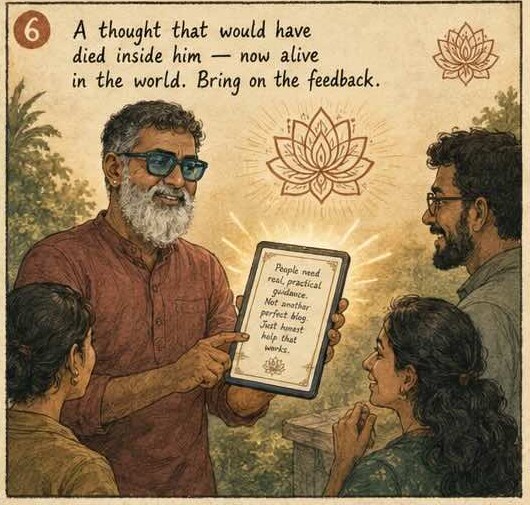
Same story as above — born not-AI-native, the perfection trap, the walk, the liberation — drawn as a strip you can take in at a glance.