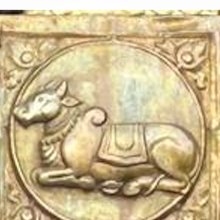
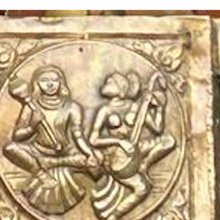
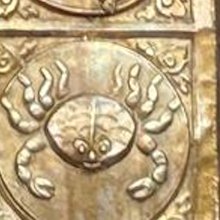
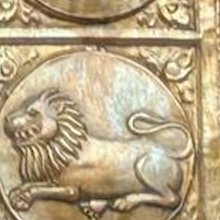
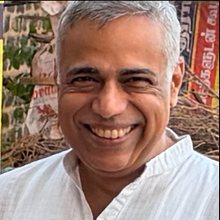
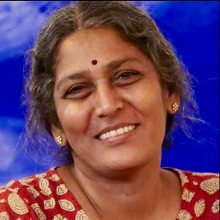
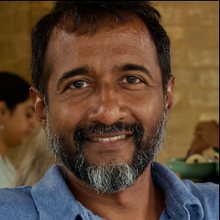
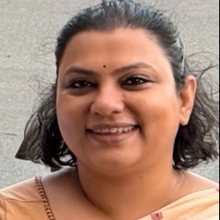
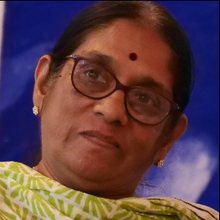
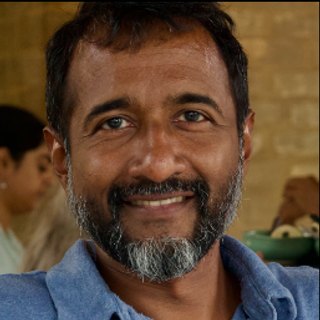
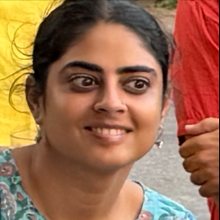
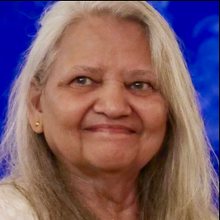
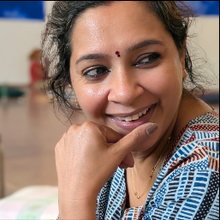

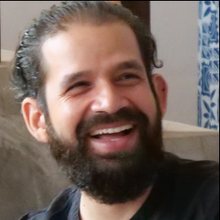
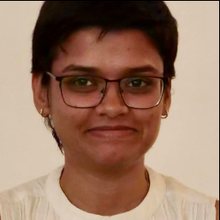
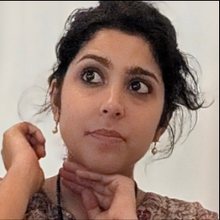
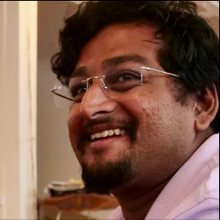
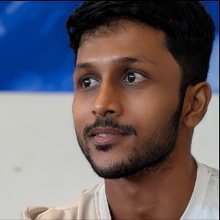
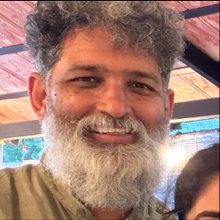
When I moved to the Auroville bioregion, I had no idea something like this would happen in my life. I learned, almost by accident, about Vikram Devatha and All Things Vedic — and what began as a continuation of a childhood interest became a year of Sunday classes I would not trade for anything. Today, that year is complete. Year One of a longer path: Astrology 101, the basics, soon to carry a postgraduate diploma through a university affiliation. I didn't come for the diploma. I came because this is the subject that brings me alive.
"Learning happens in layers"
I still remember day one, when Vikram said learning happens in layers — that we should learn at our own pace, not to prove anything to anyone, not for a certificate, but because it is the right thing to do. His other refrain, said often and gently: sit with it. And in the first class he told us we had studied this together in past lives. A year on, that doesn't feel like a thing one says. It feels true.
Four Mothers, four elements
My first wow came early. I had moved into the Matrimandir's bioregion knowing of its four energies — Mahālakṣmī, Mahākālī, Mahāsarasvatī, Maheśvarī — but no more than that. Then, in class, Vikram folded those four energies into the four elements: Mahāsarasvatī as earth, Mahālakṣmī as water, Mahākālī as fire, Maheśvarī as air. Something I had walked past became something I could read. That mapping has stayed with me.
Five elements, walked as five temples
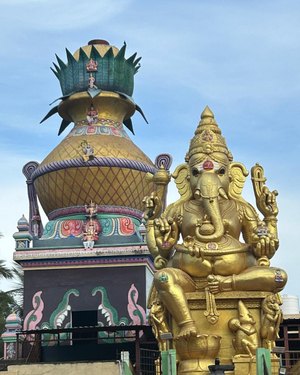
It pulled me into something that had sat on my list for years and never moved: the Pancha Bhoota Sthalam, five temples for the five elements. Kanchipuram for earth, Thiruvanaikaval for water, Tiruvannamalai for fire, Kalahasti for air, and finally Chidambaram for ākāśa — space, the field in which the other four arise. To study the elements in a Sunday class and then to stand in their temples is a kind of learning the page cannot give.
Not prediction — tendency
I had an introduction to astrology as a boy, but never this depth, and never this surprise: that astrology is equally a psychology, a way to go deeper into oneself. I was trained in the Western, corporate vocabulary of the mind. I never imagined a system this old could be as powerful a mirror.
One of Vikram's deepest teachings is that astrology is not for prediction but for understanding the tendencies of a life. I came to picture it as a grid: the navagrahas, the subtle aspects, as one axis; the bhāvas, the houses, the physical aspects of life, as the other. A Y-axis and an X-axis — and between them you begin to plot a life. Along the way I learned the daśāvatāra as dimensions of life, and even taught myself Stellarium to understand the sky. The West files all of this under "occult" — meaning only what science cannot yet express. As a student of science, I used to cringe at the word. I don't anymore.
When I started, I told Vikram I was beginning an ISB technology programme alongside this one. He is an ISB graduate himself, and he smiled: let us see which one sticks with you. A year later I have my answer.
The chart of us
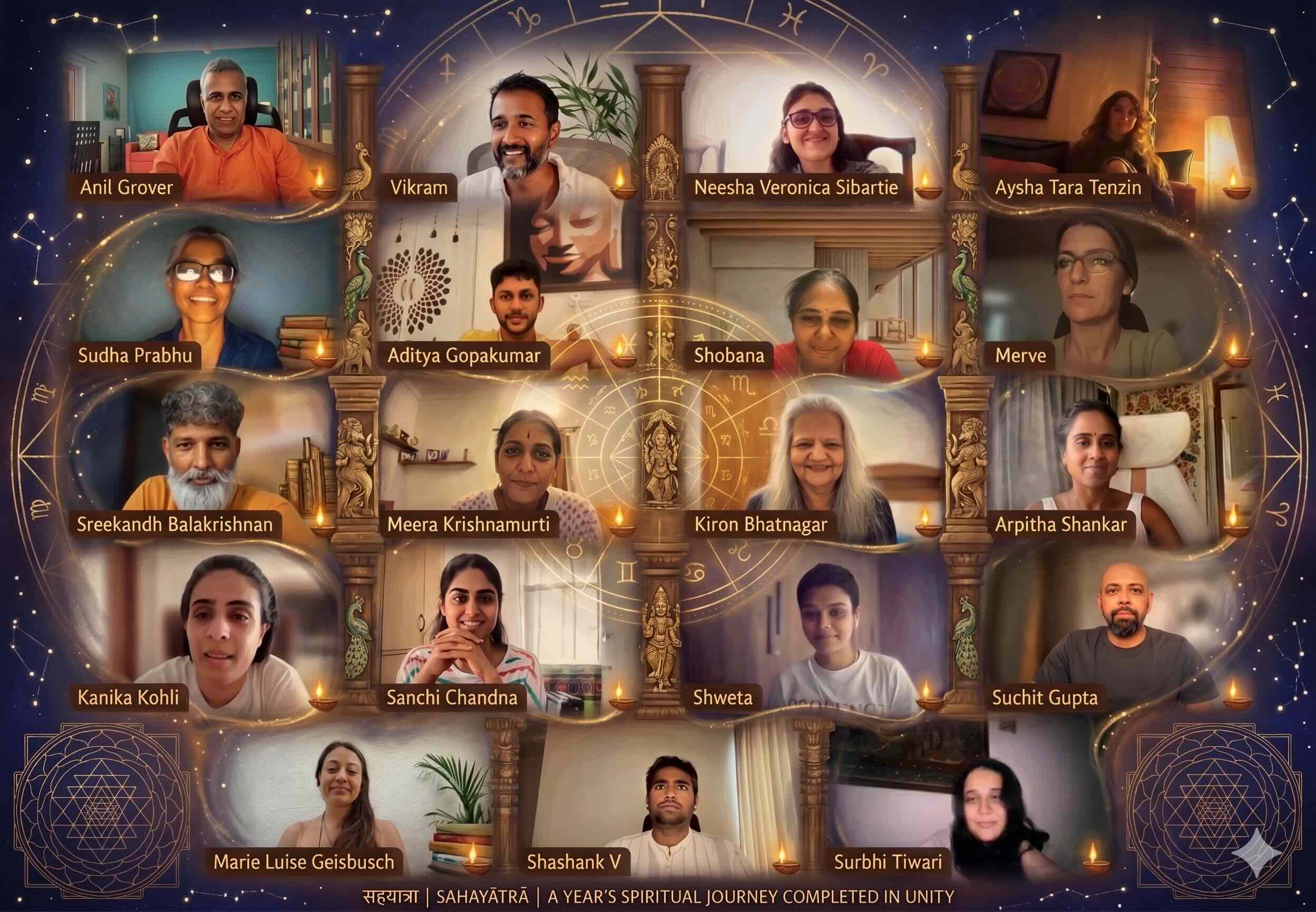
We are not yet astrologers — All Things Vedic is careful about that word, and so is Vikram. We are still learning, still reading only our own charts, the charts of famous lives, of friends. But for a year we met almost every Sunday, with homework and classwork between, and like an onion the layers came away one at a time. What I'll keep is not only the syllabus but the people — the circle above, each of whom turned a class into a year of real conversation.
नवग्रहSong of the Nine
A short chant at temple tempo — tanpura drone, a bell, soft mridangam. English verses over a Sanskrit refrain, each graha paired with its avatar, drawn from what the class taught us.
Surya, Chandra, Mangala — namaha
Budha, Guru, Shukra — namaha
Shani, Rahu, Ketu — namaha
Navagraha — namaha
Surya is Rama — the soul, the light,
Chandra is Krishna — the mind's own sight.
Mangala, Narasimha — commander, flame,
Budha the Buddha — the speech, the name.
Guru is Vamana — the teacher's grace,
Shukra, Parashurama — beauty's face.
Shani is Kurma — slow, the karmic stone,
Rahu, Varaha — the head alone.
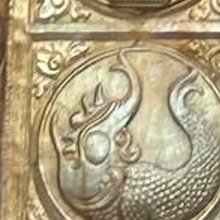
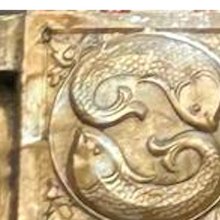
Ketu is Matsya — to let go, be free —
moksha, the truth, eternity.
Surya, Chandra, Mangala — namaha
Budha, Guru, Shukra — namaha
Shani, Rahu, Ketu — namaha
Navagraha — namaha
Voices from the circle
“Astrology 101 has been the light at the end of a long, long tunnel — and Vikram, holding the torch to show the way.”
“Grateful to ‘All Things Vedic’ for Year 1 of this four-year journey — blending astronomy, astrology, mythology, and philosophy through Sunday Zoom sessions and experiential retreats, deepening self-awareness.”
“Astro101 has made me aware of all the navagrahas playing inside me at different times of the day — am enjoying that awareness.”

“Inward expansion.”

“सितारों से स्वयं तक की यात्रा”
“Sitaron se swayam tak ki yatra” — a journey to understand yourself, through the cosmos.
“A course that made me experience a decade in a single year.”

“Learning the language of the stars has been a journey deeper within. ✨”

“Astrology has filled my mind with meaningful questions and endless wonder. It overwhelms me at times, yet humbles me every time. Along the way, it has become a quiet companion in my everyday life and perhaps its greatest gift, led me to a family where I truly feel I belong.”
Gathered as they come — more voices to be added.
The ones who held the retreats
The year's learning lived online, every Sunday — but it came together in person, on retreat. These two held that space, and turned what we'd studied into something we could stand on.
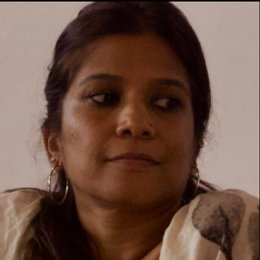
Our Śani, our Kūrma — slow, steady, grounding, the tortoise that bears the weight. Through the retreats Megha held, everything we'd gathered online across the year finally settled into the body and integrated. Her patience was the ground we stood on.
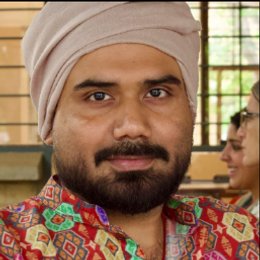
Suraj held space as a facilitator through many of those retreats — a huge part of what made them what they were.
प्रणाम — with a bow, and in a state of wow and wonder that this happened at all.